|
Graying hippies and boomers still reeling over Jim
Morrison's death, and kids who're just mourning lost Lizard King
mythology now, can salve their aches because the Doors are,
um, back ... in a way.
And this writer is no fan of rewritten musical history,
particularly when it involves the remixing of actual
multi-track master tapes — a record and its mix capture a moment in
time, period. But, this boxed set is a stunner. And it's the
high-resolution remixes that elevate it above yet another crude
Doors cash-in.
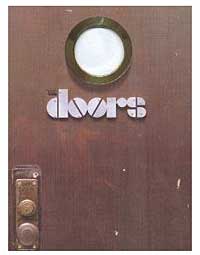
First, the box's cover is a door that sports a peephole through
which images of the band can be rotated by a finger-controlled
wheel. Fun, eh? Inside, the albums are housed in two-disc digipaks,
each containing a booklet, a CD of the original mixes — but the
exact same as the 1999 reissues — and a second disc of stereo and
surround album remixes (in DVD-Audio advanced resolution, DTS and
Dolby Digital). Included are unreleased song outtakes, pics, lyrics
and video footage from TV shows and live performances.
The new remixes (by band engineer/producer Bruce Botnick — see
sidebar) lift smoggy veils from the original tracks, revealing a
clarity (and bits cut from the original mixes) that has never been
heard before. Combine that with inherent hi-res (24/96) residuals
and the band sounds more rock 'n' roll — even ferocious at times —
with all the warmth of analog. You can hear what the Doors were
really all about.
And Morrison sounds more baleful and more sensitive and more
full-of-himself than ever. An example: the telling "she gets high"
refrain that's been restored to "Break on Through (To The Other
Side)" changes the whole feel of the song. When he croons, his low
register just resonates. And wherever you stand on Morrison's purple
Verlaine and Rimbaud nods, he's never sounded so passionate, and
never has it been so evident just what a great, nuanced rock 'n'
roll singer he was, even as his voice degenerated to a booze-baked,
pitched rasp by L.A. Woman. His personas are magnified; he's
the blue-collar asshole on the barstool on Morrison Hotel,
he's the whorehouse priest on Strange Days, he's a sensitive
shaman on Soft Parade, he's a gin-blossomed drunk on LA
Woman. The Oedipal lament of "The End" is scary in hi-res; the
drunken pop star is walking on down your hall, walking on
down to your mother's bedroom. Words left off the original
build to a crescendo ... "fuuuck" ... and you still don't
know if it's genius or affected garbage. But, he's in your
hallway. The hi-res is that involving. Morrison's every hoarsey tone
is so in-the-moment, so you-can-reach-out-touch-it, that you can
feel his voice box stinging from booze and overuse throughout the
new mixes.
In DVD-audio, the musical harmonics arrive at their logical
destination. Ray Manzarek's organ riffs swell and recede, low notes
resound deep in the chest. John Densmore is all elbows, groove and
clang; cymbals and crashes hang and sustain as they should. Robby
Krieger's guitars are louder, defined. Reverb and echo trails and
the ambience of the recordings are captured — you can hear
the room in which the songs were cut. It's as if you can get up and
touch each band member, walk around them as they play; and that's
just in the stereo mix. In surround, the band is sitting all around
you. (Strangely, the advanced resolution surround track of "Love Her
Madly" and the entire Waiting For the Sun album is in 5.0,
and not 5.1, thus eliminating extra subwoofer oomph.)
You get many little bits and pieces left off the original mixes
too, including longer intros on "Touch Me" and "Soft Parade." The
running speed problems on The Doors are now "corrected." Some
great outtakes include versions of "Indian Summer" (with the
original 1966 vocal), the jazz version of "Queen of the Highway"
from Morrison Hotel and two takes of "Moonlight Drive" from
The Doors. Some Morrison studio banter shows a guy who wasn't
so mired in selfness; it's the kind of stuff that goes lengths to
shatter the Morrison mythology.
This set is the Doors for those who don't dig the Doors — they
were, after all, a straight-up rock 'n' roll band — and also one for
Doors completists and audiophiles. The only downer is the classic
mixes aren't included on the hi-res discs. After this you'll never
want to hear a compressed iPod file again.
Doors engineer/producer talks remixing history
Bruce Botnick engineered all six Doors albums and produced LA
Woman. And he's responsible for all the stereo and surround
mixes for this boxed set. We hit him up with a few questions about
putting together the Perception project.
Metro Times: The new 24/96 stereo and surround mixes sound
glorious — lots of air and a huge soundstage — but are remarkably
faithful to the originals in a warm, analog-y sense. What kind of
condition were the original source tapes in? Did you do any remixing
on vintage tape machines, or was it dumped into a hard-drive?
Bruce Botnick: The original tapes are in excellent
condition, stored in a climate-controlled, fireproof environment.
The temperature is around 50 degrees but the air is treated so that
when you're in the room you can quickly dehydrate.
All the album tapes were carefully transferred analog to digital
at 96 kHz / 24 bit onto ProTools HD using Pacific Microsonic A/D
converters. The mixing was done entirely digital and became analog
again by playing through your loudspeakers. No intermediate steps to
interfere with the quality of the sound were used.
MT: The debut was basically done on a four-track, right?
BB: Yes. The Doors was recorded on four-track,
half-inch tape at 15 ips (inches per second). This and three-track
was the standard for recording in 1966.
MT: How difficult was it to mix that album into 5.1
surround?
BB: The Doors was a bit difficult to mix and it
wasn't. The console was three-track, so we monitored in three-track,
left-center-right. The fourth track was used for occasional
percussion, bass and alternate vocals. Being that we only had four
tracks on the tape, I determined that the best thing to do was to
make a natural soundscape and allow the music to breathe. In
surround, there is a feeling of air and the guys are almost in the
room with you.
MT: Was there ever a point while remixing where you threw
up your arms, nearly gave up and said, "This just isn't possible"?
BB: I always knew that the mixes were going to come out
right, although there were moments when I didn't feel the music and
things didn't come together as I wanted. In those cases, I would
just turn everything off in my studio and go home to return at
another time; sometimes it could be waking up at 3 a.m. and getting
the inspiration. If we hadn't released the box as it is now, I'm
sure that I would still be tweaking it to get that last bit of
performance out of the music.
MT: Did you ever question the idea that you might be
changing an historic sound by going back and remixing it?
BB: I had a big internal debate that raged for over a year
about remixing something that's stood the test of time for 40 years.
What I realized is that when I recorded these albums, I was of a
different age and sensibility and I'm not that same person today.
It's extremely difficult to go back and be the person you were forty
years ago; pretty much impossible. I hear and feel things
differently now and wanted to bring that to the fore. If I had
matched the original mixes exactly, the new mixes would have been
sterile and lacked emotion, and that alone convinced me to go
forward and allow the music to speak to me and tell me what to do.
My goal was to bring as open and punchy a mix to the street with
the fewest generations to change and degrade the sound.
MT: The version of the song "Soft Parade" includes an
intro that's about a minute longer than the original, one that has
Morrison crooning. Where'd that come from?
BB: When I transferred the master 8-track, that opening
portion of "The Soft Parade" was tacked on the front though
separated by a paper leader. It was a wonderful surprise and still
to this day I don't know why we left if off the 1968 disc.
MT: In the 5.1 mix, Morrison just seems to float, as if
he's totally alone. The warmth in his vocals is still incredible.
How were Morrison's vocals captured in studio?
BB: In almost all cases a Telefunken U47 was the
microphone of choice with the use of Universal Audio tube 176
limiter. Let's face it, Jim had and still has a great voice, he
could croon or shake the room. You're right, he does seem to have
his own space and I directly attribute that to the center
loudspeaker, which imparts a spatial perspective and gives the music
the room to breathe.
MT: Any Morrison recording anecdote that's never been
shared?
BB: Nope, saving all that kind of stuff for the 80th
anniversary box set!

|