
Some cities inspire songs. New York City has always been lyric material. Boston, Detroit, Dallas, New Orleans, San Francisco, Memphis, Chicago; they've all inspired a lot of music in many different genres of music.
None, however, seem to capture the imagination of songwriters like Los Angeles. Perhaps it's because so many aspiring songwriters spend time in L.A. Maybe it's because of the city itself; a city of contradictions, as city that's both very self-reflective and in love with its own artifice.
Today, Sunday Morning Playlist does something a little different. Rather than explore another musical genre, we'll go on a little social anthropology excursion, and see what clues about the City of Angels we can divine from the last fifty years of popular music.
25 great songs about Los Angeles (there are many more) include:
1. X: Los Angeles
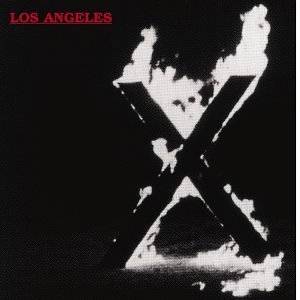
X were integral to the L.A. punk scene in the early 80's. Their 1980 debut,
Los Angeles, was produced by Ray Manzerak of the Doors in a sort of
generational torch passing. However, aside from a cover of "Soul Kitchen" on
the debut, there wasn't much in their music that resembled the Doors beyond a
palpable sense of chaos and dread. Song titles like "Johnny Hit and Run
Pauline" and "The Phone's Off The Hook, But You're Not" pretty much tell the
story of the band's early outlook, which was nihilistic and somewhat
disturbed. Over the years, they'd add more psychobilly and roots rock
influence to their music, but on "Los Angeles" they are a full tilt punk band,
whose dual vocals from Exene Cervenka and John Doe gave them a sonic texture
more resonant than many of their competitors. "Los Angeles" is portrait of the
city as frightening place, where people are driven mad and the days turn to
nights, they change in an instant...
2. Bob Seger & The Silver Bullet Band: Hollywood Nights

This was Seger's message to the faithful back home in Michigan. Sure, he may
have gone Hollywood, but he was still a simple old midwestern boy at heart.
The 1980 album Stranger In Town marked the end of his mega-platinum
peak, although he'd ride momentum through the first half of the 1980's to
notch a few more hits before the fade set in. Like spiritual cousin Bruce
Springsteen, Seger took a lot of flack for abandoning his root constituency by
moving west, although one can hardly blame him. "Hollywood Nights" paints L.A.
(or L.A. women) as corrupter of innocents who are razzledazzled by the view of
the lights from the hills. It's cliched as a B-actress' memoirs, but Seger
manages to convey enough working-class sweat to make the tale believable.
Still a radio staple to this day.
3. Arlo Guthrie: Coming Into Los Angeles

Arlo Guthrie, son of Woodie, sang "Coming Into Los Angeles" at Woodstock, and
enjoyed a few years of modest sales and even a couple of hits in the late
60's-early 70's. "Coming Into Los Angeles" portrays Los Angeles as destination
point for smuggled drugs; his almost naive "Don't touch my bags if you
please, mister customs man" portrays a world no longer existent in the
post 9-11 age; who is going to smuggle in a couple of keys (with which he
rhymes 'Angeles') in their carry on these days? Still, Los Angeles continues
to love its drugs, and they've got to be coming from somewhere. So while
"Coming Into Los Angeles" may be hippie relic, its sentiments still are
serviceable today. A studio version of the song appears on Guthrie's 1969
album Running Down The Road, but it's the Woodstock version he's most
well-known for.
4. The Doors: L.A. Woman

For many, the Doors were the quintessential Los Angeles band, formed in
Venice, full of theater, cinematic songs, melodrama, booze and drugs, and a
muddleheaded peace ethic. Long after the band was derided by the rock
intelligentsia as "overrated" at best, and ridiculous at worst, Los Angeles
has always had a special place in its heart for them. So it makes sense that
in 1971, the band would dedicate an album to the city that embraced them. The
title cut, "L.A. Woman" captures all anyone needs to know about the Doors in
2071; except for the bass player they hired especially for the sessions, all
the typical Doors moves are present; long keyboard parts, convoluted poetry, a
wildeyed earnest romanticism coupled with a vaguely sleazy worldview, and a
hummability despite itself. The album continued a comeback of sorts that had
begun with Morrison Motel in 1970, but Morrison wouldn't live to see
his love letter to Los Angeles become a perennial; L.A. Woman was
completed weeks before his death. Morrison's message: cops in cars, topless
bars, never saw a woman so alone...
5. Mamas and the Papas: 12:30 (Young Girls Are Coming To The Canyon)

The Mamas and Papas, transplanted from the East Coast, had already established
their West Coast credentials with "California Dreamin'", which mentions L.A.,
their first hit. However, their biggest L.A. specific hit was "12:30 (Young
Girls are Coming to the Canyon)" a 1967 Summer of Love hit that took the
dreamin' into actual migration; it's a lush harmony number that conjures up
images of flower girls all looking like Michelle Phillips, traipsing through
Topanga with love in their hearts and smiles on their faces in contrast to
"dark and dirty" New York City, which gets dissed big time by these DC-area
folkies. Californians who complain about the massive youth influx in the 60's,
which helped ruin L.A. and S.F. when they were overrun, can lay a lot of blame
at the Mamas and Papas' doorstep; they romanticized L.A. in "Calfirnia Dreamin'"
and "12:30", and John Phillips wrote "San Francisco (Be Sure To Wear Flowers
In Your Hair)" which misled thousands of naive kids. That said, "12:30" is
still an awfully pretty track, a distorted snapshot of one summer in L.A.
history that will never be repeated.
6. Red Hot Chili Peppers: Under The Bridge

Los Angeles was in a bad way in 1992. It had become one of the most violent
cities in the nation, with drive-by shootings running amok, racial tensions
that erupted in the Rodney King riots, a deterioration of city services.
"Under the Bridge", a memoir of Anthony Keidis' heroin days was almost
touching at the time in the love it expressed for the city, which was as
humiliated and degraded as any junkie. It paints a portrait of the city as
omnipresent companion, who sees good deeds and by implication, bad ones too.
Even the most alienated find some comfort in the existence of the city, and
see it on their own terms, as it witnesses the life each carves out without
judgment. You're on your own here, but you're never alone even when you're
alone. As a veteran junkie journeyman band, little known outside of L.A. until
"Under the Bridge" broke them in a huge way, these sentiments, which are not
unlike Jim Morrison's romanticism of "L.A. Woman" in some respects, come
easily and honestly. They'd revisit L.A. as theme many times, including on
their 1999 album Californication.
7. Randy Newman: I Love L.A.

Can't leave this off the list. A wiseguy take on L.A. from wiseguy
singer/songwriter Newman, who used to make the "artist most likely to get
punched in the nose" lists regularly in the late 70's and early 80's. Smug,
rich, with lots of movie connections, Newman is a particularly Angeleno sort
of wiseguy, and Angelenos still generally love him for it, even if his shtick
has long ago stopped charming people east of the 110 Freeway. "I Love L.A."
appeared on his 1982 album Trouble in Paradise and remained the city
anthem through the 1980's, especially during 1984, when L.A. hosted the Summer
Olympics. "I Love L.A." cranks up the smugness to cartoon levels and takes the
requisite swipe at New York and Chicago as it draws a picture of street after
street under gloriously sunny skies, "Looks like another perfect day; I
love L.A.", while noting the beauty of L.A. women as well as the bum on
his knees. Smug sure; but despite its overboard irony, it actually does a good
job of taking a thumbnail sketch of 1980's Los Angeles.
8. Sheryl Crow: All I Wanna Do
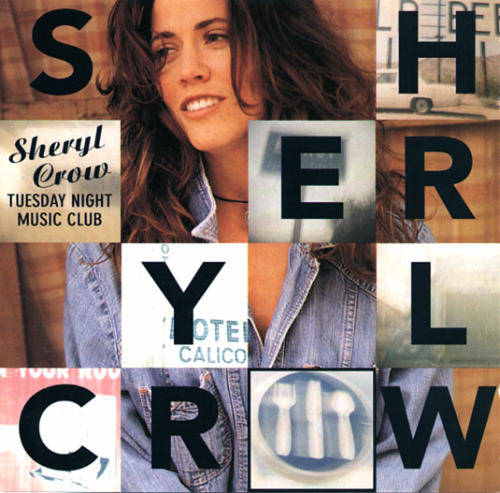
Sheryl Crow's woozy 1993 debut smash "All I Wanna Do" did a good job of
capturing the hungover, morning-after L.A. of the post-riot 90's; while on the
surface it appears to be a party song, and it is, it is an oddly non-joyous
sounding one. Instead, it's jaded and cooler-than-thou. Yet it also conveys a
rally-the-troops sense of let's shake off this malaise, which was an
appreciated enough sentiment in 1993 that the song became something of a
rallying cry despite (or because of) its laid-back, still-drinking-at-sunrise
sentiment. Crow herself was already a veteran of the L.A. music scene by the
time she got to record her debut; this adds a patina of believability to the
song. She never did really revisit the oddball viewpoint she expressed on this
song; her later work has been much more conventional. But this remains an L.A.
favorite to this day.
9. Guns 'n' Roses: Paradise City

I could just as easily mention the notorious "One In A Million" here, which is
as much about L.A. as the Michael Douglas flick Falling Down, expressing the
same xenophobic pre-riot mindset: can't these lousy foreigners go back to
Africa, or Mexico, or China, or wherever they come from? In truth, "One In A
Million" as abhorrent is it is, is probably a more accurate portrayal of L.A.
than "Paradise City", which could only have been written by the biggest hair
band on Sunset Strip. Essentially the message here is: I love the babes in
L.A., can't wait to get off the road, where the babes aren't as hot. Guns 'n'
Roses, of course, never capitalized on what seemed certain to become an
enormous level of stardom; after more than a decade of inaction interrupted
only by fuck-ups, Chinese Democracy has yet to see the light of day.
Posers since day one, G 'n' R will always be remembered for their Sunset Strip
heroics in the 1980's, but Angelenos seemed to have moved on.
10. U2: Desire (Hollywood Remix)
![U2: Desire [CD Single] (1988)](../img19/822/usdesire7qv.gif)
U2 debuted "Where the Streets Have No Name" by playing on a downtown L.A.
rooftop without a permit and were busted just like the Beatles were when they
tried it in London. The band had spent the better part of the year touring
America, developing a romantic fondness for and sociologist's curiosity about
the desert ("Joshua Tree") and points west. For their next album, Rattle
and Hum from 1988, "Desire" was chosen as a single, and a special
"Hollywood Remix" accompanied it. A relic of L.A.'s violent late 80's, it
opens with the sound of either a car alarm or a siren, followed by news
reports of a Hollywood shooting, and sounds of gunfire, and a sampled snippet
labeling it "Voodoo Economics", a buzzword from the '88 election. While the
song in its original form doesn't mention L.A. specifically, its themes of
drugs, guns, and reckless ambition resonated perfectly with the then-current
metropolitan milieu. Hollywood now has undergone a remarkable and successful
facelift and gentrification; the shoot 'em up Hollywood of 1988 that this
single reflects is largely swept clean.
11. 10,000 Maniacs: City of Angels
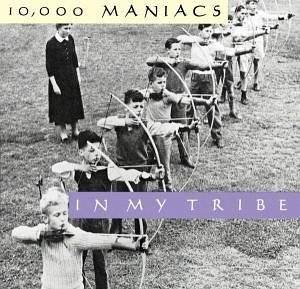
Earnest and concerned 80's college radio favorites 10,000 Maniacs confront the
obvious contradictions between the "Paradise" image so often invoked (see Guns
'n' Roses, the Eagles, Randy Newman) and the largest homeless population in
the United States, largely centered around 6th Street (where Axl growled at
the foreigners in "One In A Million, and Randy Newman loves in "I Love L.A.")
The song is a lush romantic waltz with lilting chorus and delicate touches
throughout as befits a city of angels, while Natalie Merchant supplies one of
her loveliest vocals; the lyrics, a little on the goody-goody side and
offering nothing but a tsk tsk about the situation, basically say "Hey I
expected paradise, and all I got were these homeless, what's up with that?" As
it wasn't a single, it never really makes lists such as this one, but it makes
a valid point about 1987 Los Angeles that still hasn't been fixed nearly 20
years later.
12. Frank Sinatra: L.A. Is My Lady

"L.A. Is My Lady" was Sinatra's attempt to cash in on Olympic fever in 1984,
and perhaps come up with a classic along the lines of "New York, New York".
Sinatra was 69 at the time, and sounds decrepit; it and the album that shares
its title would be the last serious recordings of his career. The results
aren't pretty; Quincy Jones' vaguely discofied synthetic-jazz production job
doesn't suit Sinatra at all, and despite a nice showbizzy finale, Sinatra's
vocal just doesn't muster enough energy to make it a worthwhile anthem. The
single tanked, and aside from Duets I & II in 1990, Sinatra was done.
Its sentiments are nice though; it's another personalization of the city
itself (see L.A. Woman, Under the Bridge) but from the viewpoint of a lifelong
winner. That view: L.A. never lets me down; no other place like it.
13. Missing Persons: Walking In L.A.
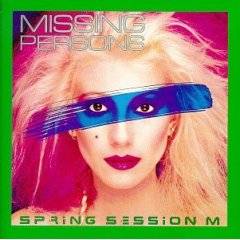
While Missing Persons ("Words", "Destination Unknown"), an early 80's new wave
unit with a decidedly space-age campiness to it, aren't well remembered by the
world at large, "Walking in L.A." will always be on the L.A. song pantheon.
Things have changed a lot since 1983, when this song peaked at #70 nationally.
Now L.A. has a new (small, inadequate) subway system, and has become a much
denser city, so you do see people walking in places they didn't walk 23 years
ago. But for the most part, the song still holds true; while the verses that
end "nobody walks in L.A." aren't entirely true anymore, the last
verse that says "only a nobody walks in L.A." is probably still
accurate. The song also namedrops a couple of local landmarks, which no longer
exist. One thing that always set L.A. apart from other major urban areas was
its long blocks of deserted sidewalks and slow, dense traffic. The sidewalks
see a little action now, but the traffic is slower and denser.
14. Tom Petty: Free Fallin'

And let us not forget the frequently forgotten San Fernando Valley, the butt
of many a joke south of the Hollywood Hills, mile after mile of stripmalls and
surburban tract housing; often ridiculed as the most boring place on earth.
While most of the Valley is part of the city of Los Angeles (having lost a
referendum to leave the city in 2002), it might as well be on Mars; in 1989,
when "Free Fallin'" was released, it was still a mostly working-to-middle
class suburb that was remarkably self contained, in much the same way Long
Island is to New York City. Petty's take is a little goofy in places "the bad
boys are standing in the shadows, and the good girls are home with broken
hearts", but he does a good job of morphing the notions of "free and free
falling". The ultimate message? "I'm kind of a jerk for leaving that nice girl
from Reseda"
15. Patti Smith: Redondo Beach

Redondo Beach is one of the more sleazier beach areas in the South Bay area,
or at least it was in 1975, when New York-based Smith included this odd little
reggae on her debut album, Horses. A tale of either murder or suicide,
with a protagonist who is or isn't a lesbian, "Redondo Beach" doesn't capture
much about the place itself except in the most nebulous sense; it has always
been a place with its fair share of loser and drifter types, and occasionally
has had to sensational murder. It gets the nod simply because so few New
Yorkers bother to acknowledge L.A. beyond stereotypes, let alone bother to
learn the names of its outlying communities. Plus a reggae by a New Yorker
about Redondo ought to appeal to the typically eclectic Los Angeleno's
palette.
16. Frank Zappa: Valley Girl
![Frank Zappa: Valley Girl [45] (1981)](../img85/3173/frankzappavalleygirl4ua.jpg)
Back to the Valley again, this time for the song that put the Valley on the
map, so to speak, Frank Zappa's 1981 hit "Valley Girl". While Zappa and his
band provide some meaty guitar and laconic vocals, the star of the show is
really Zappa's 13-year old daughter, Valley native Moon Unit, who essentially
goes through a rundown of idiomatic Valley English as a primer of sorts for
the nation at large. "Gag me with a spoon" has been part of the lexicon ever
since. Plus we get "totally bitchin'", "Barf me out", "like, oh my god" and
much much more. The song is mainly Moon's monologue, with Frank supplying
angular guitar and general noise. It was requested constantly in L.A. when it
was new; whether or not you need to hear it now depends on whether you're from
the Valley and/or you are a Zappa fan.
17. The Eagles: The Last Resort
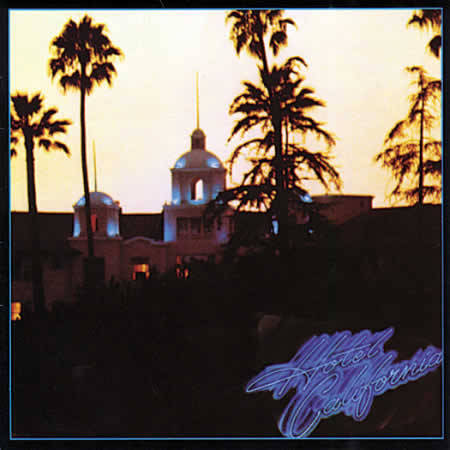
"Hotel California" from the same album would have been a more obvious
choice, but I've always been more partial to the stately weeper "The Last
Resort" which closes the Hotel California album, from 1976. In many
respects, Hotel California is a concept album about L.A., or at least a
thematically unified album with L.A. as its focus; "New Kid In Town" and "Life
In The Fast Lane" are L.A.-centric sentiments, even if not explicitly about
the city. "The Last Resort" mourns the loss of the mythical El Dorado-esque
Los Angeles, offering up the poignant adage "Call some place paradise, you can
kiss it goodbye". The essential message is "too many people are coming here,
and it's starting to suck". Thirty years later, you still hear the same
refrain, although most of the newcomers aren't suckered into believing they're
coming to paradise anymore.
18. The Kinks: Celluloid Heroes

From the Kinks' early 70's show-biz phase, when their albums were mini-operas,
"Celluloid Heroes" is an admirably self contained ode to Hollyood legends long
passed, as seen as stars on the Hollywood Walk of Fame. The song itself is a
soft ballad, full of wistfulness and nostalgia, with a particularly mellow
lead guitar solo; the lyrics name drop everyone from Rudoph Valentino to Bela
Lugosi to Betty Grable. It's a lovely song, with one of Ray Davies' most
tender vocals; and it is a fittingly kitschy tribute to a kitschy landmark.
Sentimental as a black and white movie, but that's the point. It's also one of
the Kinks' best cuts from their largely disparaged 70's output. The studio
version contains an extra verse left out on the version that appears on the
1980 live album One For The Road, which more people are familiar
with.
19. Tupac Shakur: To Live and Die in L.A.
This opens with what sounds like a snippet of a radio program that pokes a
dangerous stick in the direction of the East and West rivalry, which
indirectly cost TuPac his life. It'd be easy to accuse TuPac of fatalism if he
hadn't ultimately met his fatal end; as such "To Live and Die In L.A." is like
a 4-minute synopsis for Boyz N The Hood. Yet it isn't fatalistic,
despite its acknowledgement of the dangers of L.A. ghetto existence; it offers
an olive branch to the Mexicans, and like "Under The Bridge" or "L.A. Woman"
it's a love letter to the city more than anything else, ironic given the
circumstances of TuPac's short existence. The song itself is from The Don
Killuminati: The 7 Day Theory rush released as a cash-in a mere 8 weeks
after TuPac's shooting death in Las Vegas. Credited to Makaveli, instead of
TuPac, it gave rise to the legend that TuPac wasn't dead, just hiding out.
20. Grateful Dead: West L.A. Fadeaway
"West L.A. Fadeaway" appeared on the Dead's 1987 commercial breakthrough
In The Dark, the biggest album of their long career. The song is a
sinister one, suggesting drug intrigue, organized crime, and violence; it's
about hiding out, which is another of L.A.'s traditional pastimes, used by
crooks on the lam and losers on the down-low ever since the city began
attracting citizens willing to leave it all behind at the turn of the 20th
century. Like most of the In The Dark album, which was written over
the space of nearly 7 years, the song's lyrical detail is a little richer than
usual for a Dead tune, which makes it one of the better latter-day numbers. It
also earns extra points for working in the slang term "copacetic", a word I've
never encountered east of the Sierra Nevadas.
21. Lightning Hopkins: Los Angeles Blues
This opens with a spoken dedication to Los Angeles, before launching into a
very slow, piano-based blues. The song appeared on the unfortunately named
1969 album California Mudslide (And Earthquake) In it, Hopkins thinks
of relocating, just like the Eagles feared: "People all told me if you go
to Los Angeles, Lightnin', you makin' a sad mistake, but I holler 'hello Los
Angeles', I believe I'll be on my way". Like with so many other songs,
Hopkins here identifies Los Angeles as "a friend"; two other songs on the
album also specifically mention L.A. Hopkins was 57 when he recorded this, and
although it is past his peak, he's in excellent form, with a stong unwavering
voice and he gets in a great piano solo. Blues was largely a Chicago,
Southern, and East Coast phenomenon; Los Angeles never had an indiginous blues
scene to compete with the others. Still, as long as the city has been here,
there has always been blues to sing. Hopkins, like so many others, here sings
of Los Angeles as a place to escape his blues.
22. Distillers: City of Angels

The Distillers may have had an Australian member and one from Detroit when
they formed in 1998, but they've been based largely in L.A. and recorded for
Epitaph records. "City of Angels" is from their third album, Sing Sing
Death House, from 2003. One of the few punk bands of the early 00's to
actually sound convincingly "punk", their take on L.A. is suitably raucous and
damaged in an X sort of way, perhaps crossed with Courtney Love. "City of
Angels" has a great anthemic quality to it, and the band plays in a revved-up
fashion without sacrificing an inherent tunefulness to their narrow range of
chords. Like many before them, they celebrate the very irony of the city
itself; it's both celebratory and condemning at the same time, which is like
many Los Angles songs. The Distillers haven't followed up this album, and
their lineup has had some key changes made. But even if they never follow it
up, "City of Angels" makes a worthy addition to the L.A. canon.
23. Wang Chung: To Live and Die In L.A.

Wang Chung were the moderately popular U.K. synth-pop band that gave the world
two moderately good synth-pop hits in the mid 1980's, "Dance Hall Days" and
"Everybody Have Fun Tonight". Their third biggest hit was "To Live and Die In
L.A.", which was written on commission for William Friedkin's 1985 film of the
same title, a seedy cop story set in the City of Angels. For a couple of
Brits, they do a good job of capturing the city milieu; the synthetic rhythm
suggests a freeway in motion, the lyrics paint a suitably alienated and
jaundiced view of life, colored by the disillusion that often sets in among
those who come here for the thrills. Wang Chung were a better band than
they're often given credit for; "To Live and Die In L.A." is arguably their
deepest and best single.
24. Elliott Smith: Angeles

"Angeles" is from Smith's 1997 album Either/Or, which stands as the
best of his short career; the song was also featured in the movie Good
Will Hunting. A nice acoustic-based number, it displays all the offhanded
charm that made Smith seem to be destined for greatness in the late 90's,
before his untimely death. Introspective and eerie, with a little electronic
ambiance added for color, it comes across as almost a prayer and promise to
the city itself; one could even be convinced "Angeles" refers to a woman and
not the city, were Smith not a native Angleno himself. It's confused, but
touching which pretty much sums up Smith himself. There is no shortage of sad,
confused persons like Smith in the city.
25. Shawn Mullins: Lullaby

Atlanta-borm Mullins had been trying to break into music ever since he
released a cassette in 1989 while a member of the Army Airborne Infantry
Division; it took until 1997, when he finally had a hit with "Lullaby" before
he finally made it. "Lullaby", from the album Soul's Core, is a slow
singer/songwriter number dressed up with late 90's electronica touches; it
namedrops Fairfax Avenue, the Hollywood Hills, and a few dead celebrities
while offering reassurance to yet another lonely denizen of the city of
heartbreak. The moral? Money isn't everything, and there are devils in this
angel town. "Lullaby" may remain Mullins' definitive statement; he has yet to
crack the Hot 100 again.